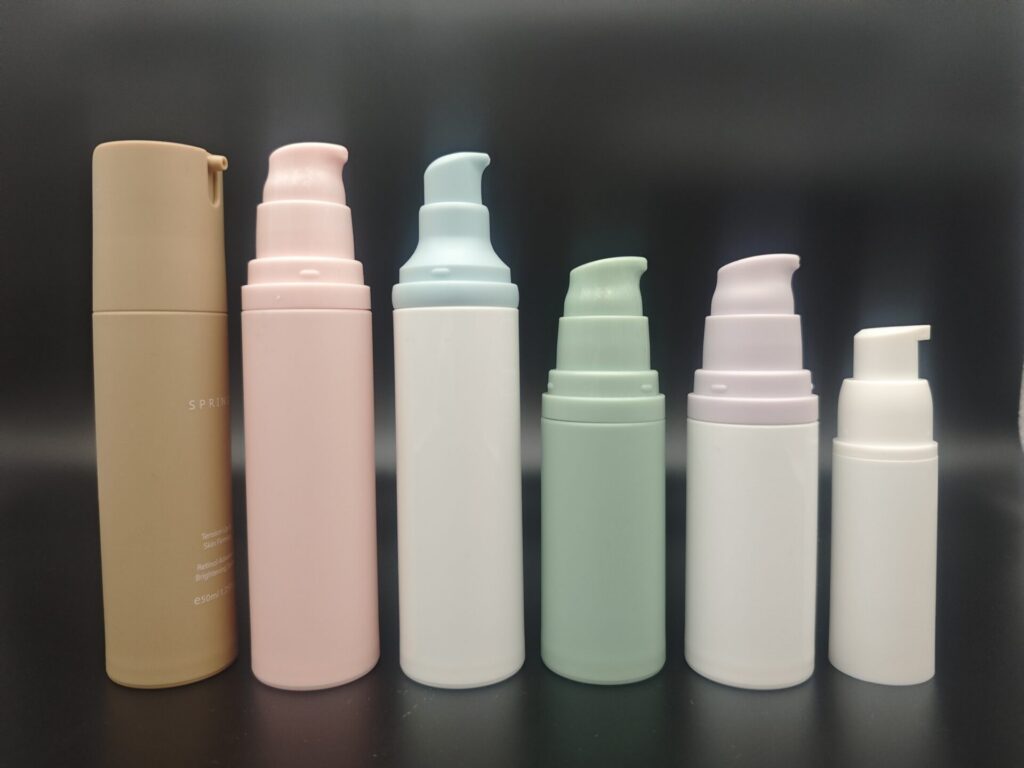
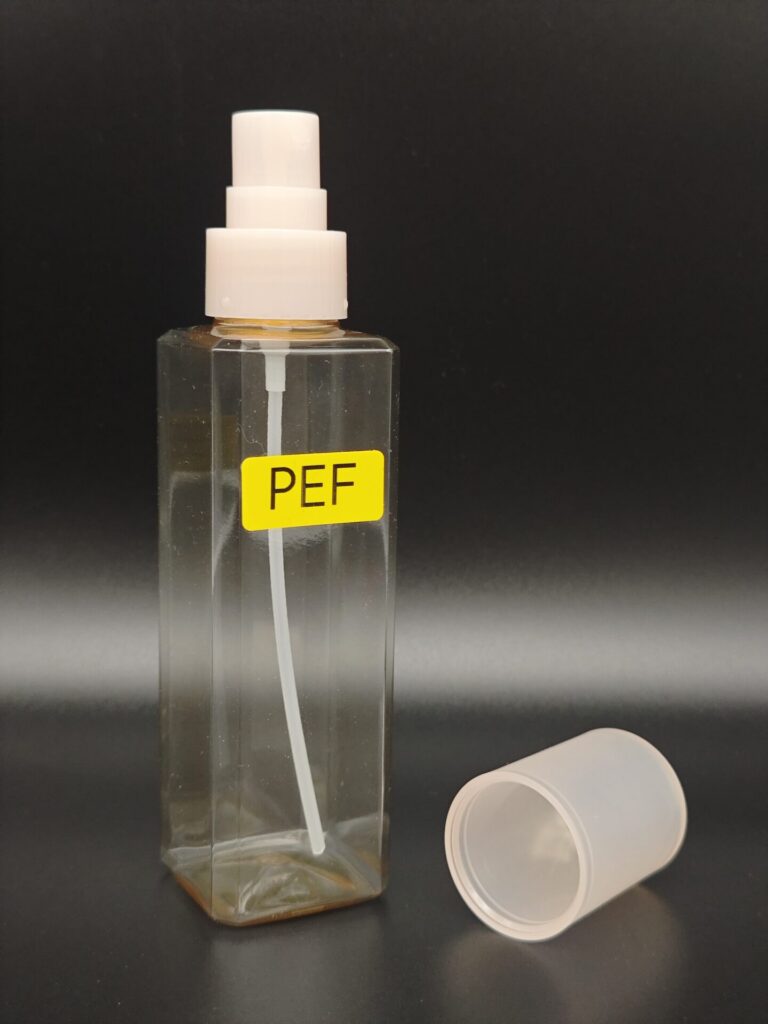
- PCR – resource conservation and promotion of the circular economy
Advantages:
- Reduced demand for fossil-based raw materials
- Lower carbon footprint (CO₂ emissions)
- Support and promotion of the circular economy
- Lightweight packaging – reduction of material consumption
Advantages:
- Significant reduction in raw material consumption / conservation of resources
- Reduction of the carbon footprint during production and transportation
- More cost-effective: lower transport costs due to reduced weight and lower production costs due to reduced material usage
- Improved handling: lightweight packaging is more practical and convenient for consumers
- Attractive for e-commerce: particularly advantageous in online retail, as shipping costs are highly dependent on weight
- Refill and refillable packaging – resource conservation
Advantages:
- Significant reduction in raw material usage compared to conventional packaging systems
- Lower carbon footprint (CO₂ emissions)
We offer refill and refillable packaging solutions for the following products:
- Airless dispensers (jars and bottles)
- Lotion dispensers
- Cosmetic jars
- Monomaterial packaging – improved recyclability
The following products are made from monomaterial (PP), which improves recyclability and supports more efficient recycling processes:
- 01-003-01 – Airless jar, PP, 30 ml / 50 ml
- 01-003-01-SQ – Airless jar, PP, 50 ml
- 01-005-01-NC – Airless bottle, PP, 30 / 50 ml
- 01-005-01-WC – Airless bottle, PP, 30 / 50 ml
and more
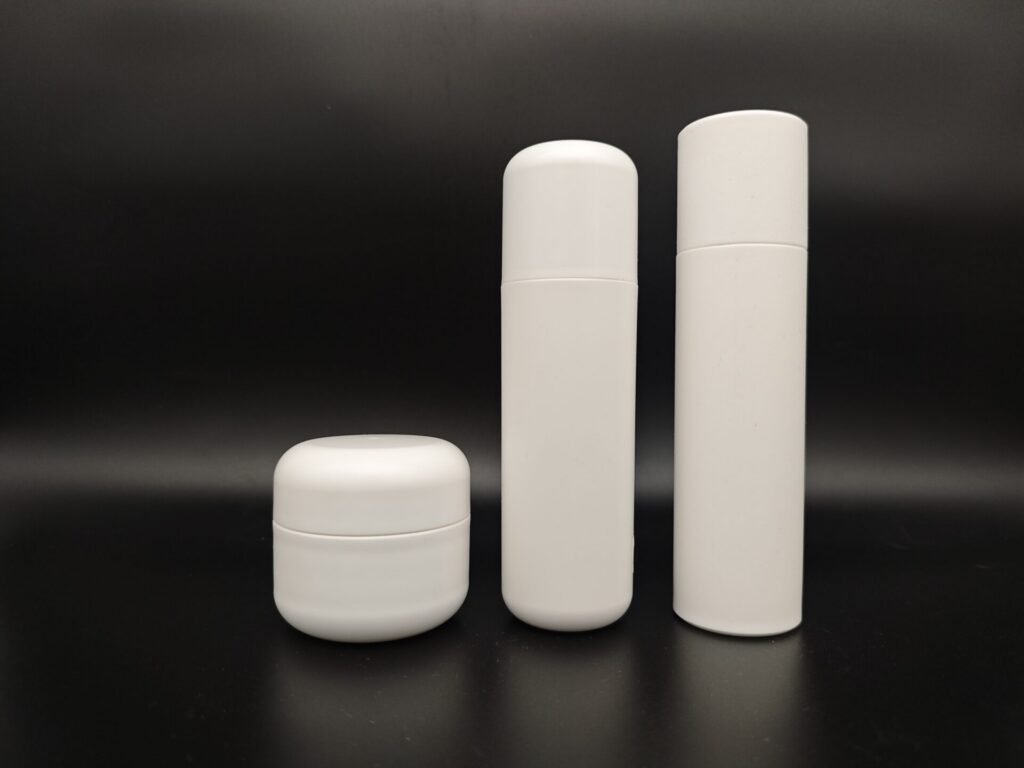
Calcium Carbonate – reducing the use of conventional plastics
Calcium carbonate is an inorganic compound with the chemical formula CaCO₃. It is a white crystalline solid, odorless, insoluble in water, reacts easily with acids, and has good thermal stability.
Raw Material – calcium carbonate in the form of calcite
In nature, calcium carbonate is commonly found in the following mineral and biological sources:
- Rocks: limestone, marble, chalk, etc. (usually in the form of calcite)
- Biological sources: seashells and corals (usually in the form of aragonite)
Components of calcium carbonate packaging:
Calcium carbonate granulate consisting of calcium carbonate, PP / rPP (polypropylene / recycled polypropylene) and additives.
Advantages:
- Reduced plastic dependency: The plastic content is reduced by the proportion of calcium carbonate used in the product, which reduces the use of conventional (fossil-based) plastics
- Reduction of the CO₂ footprint: The calcium carbonate is sourced from mineral or biological waste materials, further reducing environmental impact
- Matte finish (rough and fine textured surface): It gives the product a natural, aesthetic appearance and a pleasant tactile feel
- Refill system available

- PLA – bio-based and industrially compostable bioplastic
PLA – Polylactide / Polylactic Acid
PLA is mainly produced from straw and corn, which are ground into powder and then processed into PLA granules through biological and polymerization processes.
Raw materials: straw and corn
Components of PLA packaging:
- PLA: the main component, bio-based and industrially compostable
- Additives: improve the quality of the packaging, particularly heat resistance and moisture barrier properties, making it optimal for cosmetic applications
- Other bioplastics (if applicable)
This results in ready-to-use PLA compounds, also called “PLA blends,” which are tailored for the specific application.
Advantages:
- Bio-based: made from renewable resources such as straw and corn, etc,
- Biodegradable: suitable for industrial composting (DIN EN 13432)
- Reduction of CO₂ footprint
- Design and haptics: Matte finish offers a natural aesthetic and pleasant feel
- Optional: addition of plant fibres enhances the natural appearance
- Transparent and available in various colors
- Refill systems available
PHA packaging – bio-based and biodegradable
PHA – Polyhydroxyalkanoates
Raw materials: Plant oil waste and waste cooking oils can be used as raw materials. These are converted into a safe, usable biopolymer through biological fermentation using special bacterial cultures. The natural polyester material is then purified and processed into granules.
Components of PHA packaging:
Poly((R)-3-hydroxybutyrate-co-(R)-3-hydroxyhexanoate ≥ 98.0 (abbreviation: PHBH)
- Bio-based: made from plant-based oil waste
- Biodegradable: suitable for industrial composting (DIN EN 13432), home composting, and fully biodegradable in soil, freshwater, and marine environments
- Reduced dependence on petroleum-based plastics
- Reduction of CO₂ footprint
- Matte and smooth finish, natural aesthetic appeal and pleasant haptics
- Refill system available
- Wood fibre packaging – bio-based and biodegradable
Raw materials: wood fibres, sawdust, and wood waste (primarily pine and mixed wood), which are generated as by-products in sawmills and furniture factories.
Components of wood fibre packaging:
Wood chips, approx. 65%, bio-based materials, and inorganic fillers
- Bio-based
Biodegradable: suitable for industrial composting (DIN EN 13432) and naturally biodegradable - Reduced dependence on petroleum-based plastics
- Reduction of CO₂ footprint
- No microplastics from wood fibre components
- Matte finish, natural and high-quality appearance, pleasant haptics
- UV opacity: Blocks light and thus protects light-sensitive formulations from harmful UV radiation
- Available in various colors (solid colors only)
- Refill system available
- PCR Supplier in China – Veolia Huafei Polymer Technology (Zhejiang) Co., Ltd.
- Joint venture founded in 2013 by Veolia in China
- Leading company in the Chinese recycled plastics industry
Production capacity:
rPET pelletizing plant: 80,000 tons/year
rHDPE and rPP pelletizing plant (Reef): 30,000 tons/yearCertifications:
For further information, please visit https://www.veohuafei.com